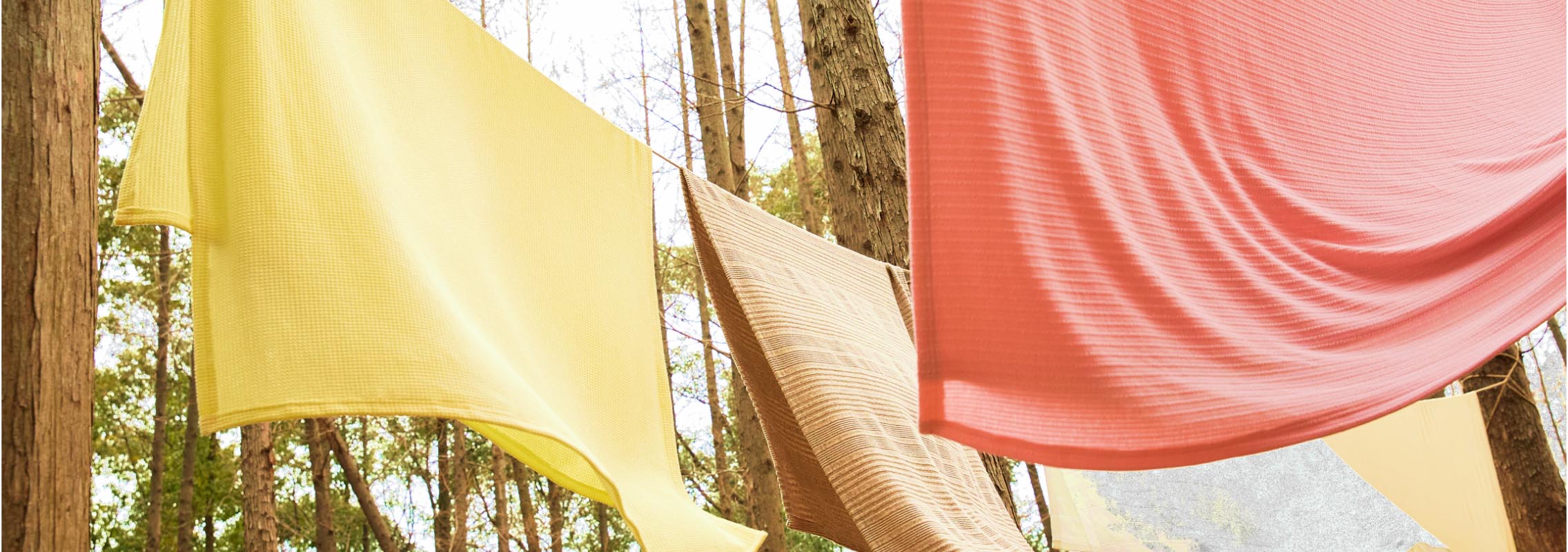
We are committed to using materials with a lower environmental impact that meet high quality and safety standards to protect both people and the planet.
evoluSHEIN BY DESIGN
In 2022, SHEIN launched evoluSHEIN by Design, our product initiative which aims to introduce and promote greater awareness and adoption of aspects of our evoluSHEIN sustainability and social impact strategy within the SHEIN ecosystem. Products developed under this initiative form a portion of our overall collection. In 2024, around 8.3% of SHEIN-branded products made with textiles designated by SHEIN were produced in accordance with our evoluSHEIN standard.
Garments sold under this initiative must fulfil the following three criteria:
- Consist of at least 30% preferred materials (refer to the “Preferred Material Sourcing” section below)
- Be produced by suppliers who have achieved an above average rating on our SHEIN Responsible Sourcing (SRS) Audits.
- Use packaging comprising at least 50% preferred materials*, such as recycled polyethylene.
While evoluSHEIN by Design is a SHEIN product initiative that aims to reduce certain environmental impacts relating to materials and packaging, it should be not interpreted as a claim that all products produced and sold as part of that initiative are sustainable.
*Preferred materials used for packaging are recycled polyethylene and FSC-labelled paper packaging.
Preferred Material Sourcing
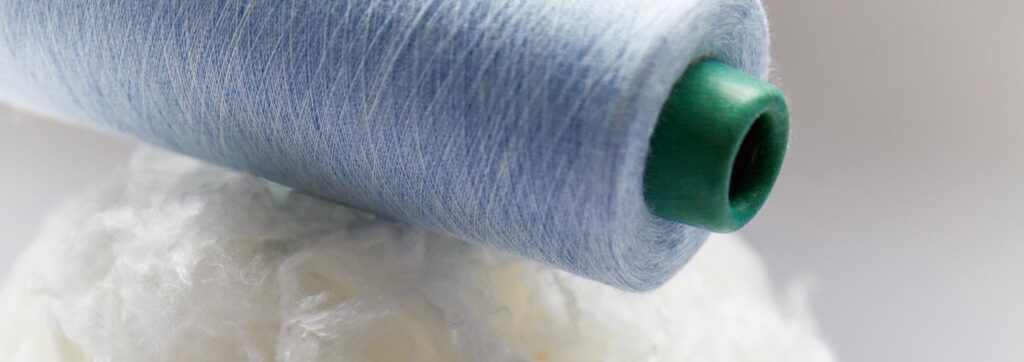
As part of our preferred materials strategy, we are currently focusing on transitioning from virgin polyester to recycled polyester and utilizing other preferred materials such as forest-safe viscose*, rescued deadstock fabrics from other brands that otherwise would have gone to waste. We aim to do this through investments and partnerships with leading organizations.
The chart below provides the breakdown by weight of fibres which constitute the textiles designated by SHEIN for use by contract manufacturers.
SHEIN’s Materials Portfolio
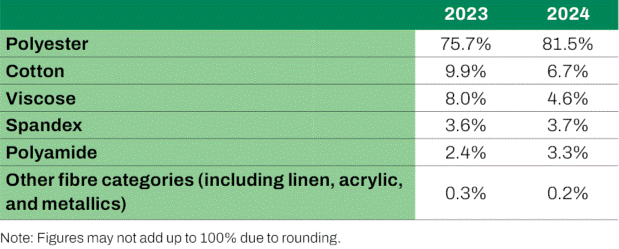
Polyester: Polyester accounts for the majority of SHEIN’s fiber portfolio, making the transition to recycled polyester a significant aspect of our decarbonisation initiative. To meet our targets, we have a plan to transition 31% of the polyester used for SHEIN-branded products to recycled polyester by 2030. The vast majority of recycled polyester materials available today are made from post-consumer PET bottles. SHEIN believes that the more sustainable pathway for recycled polyester is to support the scaling of recycled polyester made from textile waste, in order to create a truly closed-loop alternative. We are working hard to ramp up textile-to-textile recycling capacities to accelerate this transition, in collaboration with ecosystem partners. In 2024, 12.1% of recycled polyester directly sourced for SHEIN-branded products was textile-to-textile recycled polyester.
Man-made Cellulosic Fibres: We believe that man-made cellulosic materials have great potential as a preferred fiber. As a CanopyStyle signatory, SHEIN has been increasing our use of viscose that has a low risk of being sourced from Ancient and Endangered Forests, by requiring all MMCFs in fabrics utilised for SHEIN-branded products to be sourced from producers that have achieved a ‘Green Shirt’ assessment in Canopy’s annual Hot Button Report. 72.5% of viscose fabrics directly sourced for SHEIN-branded products in 2024 were from ‘Green Shirt’ rated producers, making continued progress from over 60% in 2023.
In 2024, SHEIN partnered with Yibin Grace, a fibre producer in China that received a “dark green shirt” rating from Canopy’s Hot Button Report, to co-develop fabrics utilising a Next Gen Man-Made Cellulosic Fibre made from a 50-50 blend of recycled cotton waste and FSC-certified wood pulp, Regracell®.
Rescued Materials: SHEIN’s partnership with Aloqia has grown since 2022. In 2024, 28,058 metres of high-quality deadstock materials were rescued through this partnership, marking an approximately 40% year-over-year increase. In total, this partnership has rescued over 48,000 metres of fabric, and we look forward to scaling up this effort.

Preferred Materials: SHEIN is also a member of Textile Exchange, a global non-profit organization that develops and oversees industry standards for preferred fibers and materials across the fashion and textile sectors. As we incorporate more responsible fibers into our products, we look to Textile Exchange for guidance on best practices for reducing the impact of raw materials.
*SHEIN currently sources forest-safe viscose from producers awarded a ‘Green Shirt’ rating in Canopy’s Hot Button Report, indicating low risk of sourcing from Ancient and Endangered Forests (for more information on Ancient and Endangered Forests, please refer to Canopy’s Forest Mapper).
Packaging
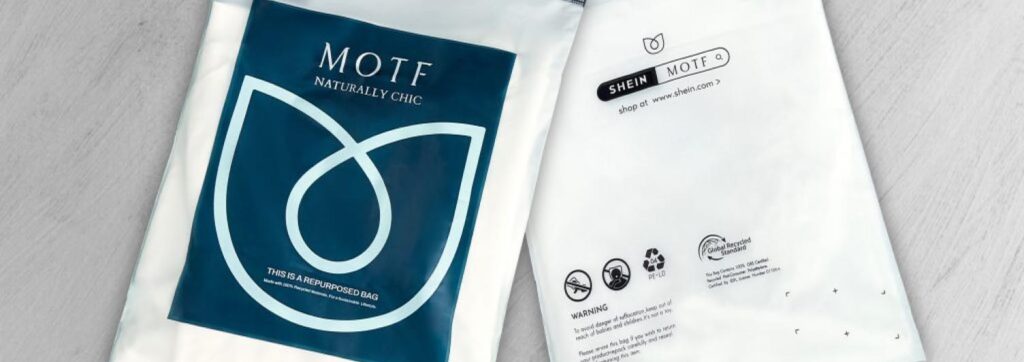
Since 2022, we have focused on transitioning our express delivery bags and garment polybags for SHEIN-branded products to incorporate more recycled materials. In total, 50.1% of all express delivery bags for packages shipped by SHEIN in 2024 were made of at least 50% recycled PE.
We are also working to transition our plastic garment polybags to 100% GRS-certified recycled PE, progressively across SHEIN brands, with over 3% of all garment polybags procured for SHEIN brands now made of 100% GRS-certified recycled PE.
In 2024, we continued to find new ways to consume less plastic by optimizing the thickness and design of our express delivery and garment polybags, resulting in a decrease in average packaging weights. Overall, the proportion of packaging procured that contained at least 50% preferred materials increased to 17.0% in 2024 from 16.2% in 2023.
Keeping in line with the specific regulatory requirements of each country we serve, SHEIN also ensures our packaging is properly labeled to help customers responsibly dispose of it. For example, all packaging bags are marked with the plastic type to support better waste separation. We have also included additional logos to support recycling efforts in line with regulations: the French Triman logo, Spanish Green Dot and Italian environmental label.
SHEIN has also joined the Canopy Pack4Good commitment to increase the use of recycled and forest-safe content in packaging.
Product QUality & Safety
Quality and Durability
SHEIN adopts rigorous targets for the continual improvement of apparel product quality, drawing on standardized testing and customer feedback to guide our efforts.
We have established internal standards for material factors like tear strength, pilling and color fastness, and require our textile suppliers to submit updated quality test reports for these factors.
Chemical Safety
At SHEIN, we are building compliance control processes that uphold chemical and physical safety standards.
SHEIN maintains a Restricted Substances List (RSL) that imposes restrictions on per- and polyfluoroalkyl substances (PFAS) that takes guidance from international standards and regulations including but not restricted to:
- The Apparel and Footwear International RSL Management (AFIRM) Group.
- Registration, Evaluation, Authorisation and Restriction of Chemicals (REACH).
- The Stockholm Convention and Aarhus Protocol on Persistent Organic Pollutants (POPs).
- Other relevant national and regional regulations.
In 2023, SHEIN updated its RSL for materials so that it remains up to date with revised PFAS regulations. We also developed and launched a Manufacturing Restricted Substances List (MRSL) for materials used in manufacturing, compiling prohibited chemical substances that are often used in dyes, additives and finishing agents.